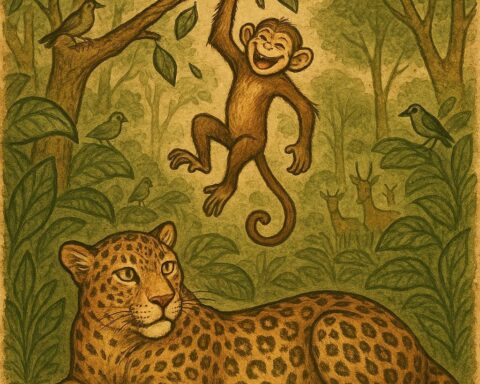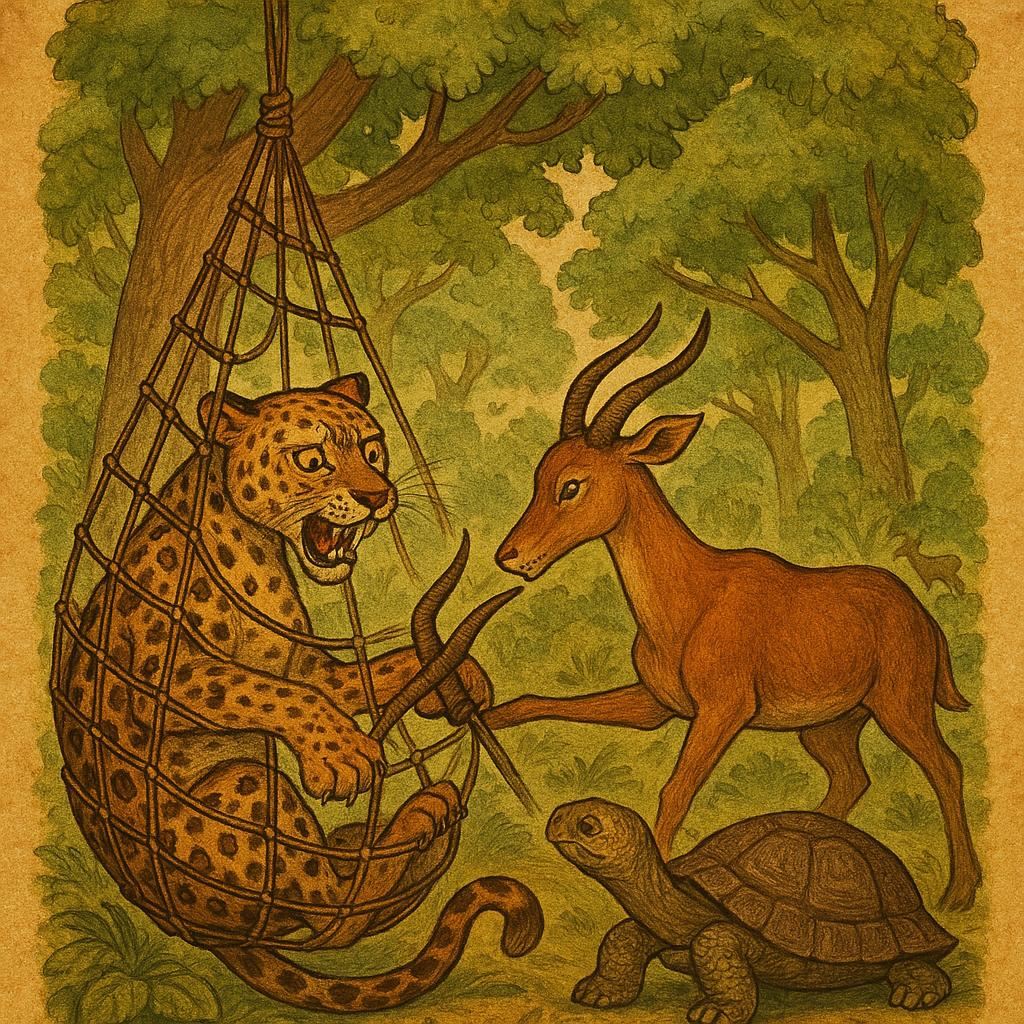
Long ago, in the forests of Gabon, Leopard prowled proudly. He was strong and feared by many. Antelope lived nearby, gentle and quick, always ready to help others.
One day, Leopard fell into a hunter’s trap. A rope held him tightly, and he roared in fear. “Brother Antelope, help me! Free me before the hunter comes!”
Antelope hesitated. He knew Leopard was dangerous, but his kind heart could not leave him to suffer. Carefully, he loosened the rope with his horns. Leopard stood free and said, “You have saved my life. You are my true friend.”
But Leopard’s gratitude did not last. Soon he thought, “Why should I spare Antelope? He would make a fine meal.”
Leopard invited Antelope to share food under a tree. “Come, my friend. Sit with me,” he said sweetly. Antelope felt uneasy, but he agreed.
Nearby, wise Tortoise watched closely. He saw Leopard licking his lips, ready to pounce. Just as Leopard leapt forward, Tortoise shouted, “Stop! Is this how you repay kindness? Antelope saved your life, yet you betray him!”
Antelope jumped away, safe. The forest animals gathered, and all agreed: “Leopard cannot be trusted. He is ungrateful.”
Ashamed, Leopard slunk into the shadows, alone and distrusted. From then on, Antelope was admired for his kindness, and Tortoise reminded everyone: true strength comes from gratitude.
Moral of the Story: Gratitude must always be repaid with kindness, not betrayal.
Word Helper:
- Prowled – moved quietly while hunting.
- Trap – something made to catch animals.
- Gratitude – being thankful for help.
- Betray – to trick or hurt someone who trusts you.
- Admired – respected and looked up to.
Summary for Parents/Teachers :
This Gabonese folktale carries an essential life lesson about gratitude and trust. Leopard’s downfall begins the moment he forgets the kindness shown to him by Antelope. The story shows children how betrayal damages relationships, while gratitude builds respect and trust.
Antelope demonstrates compassion even when it is risky, freeing Leopard from the hunter’s trap. His actions reflect the principle that kindness is most valuable when it comes without expectation. However, Leopard represents the dangers of selfishness and greed. Instead of honoring Antelope, he plots to harm him, showing that ingratitude leads to isolation and shame.
Tortoise plays the role of wisdom and truth. He reminds the forest animals and young readers, that even a small voice can defend justice. By speaking up at the right moment, Tortoise prevents Antelope’s betrayal and teaches the community the true meaning of gratitude.
For children, this story is a clear example of why gratitude matters in everyday life. Parents and teachers can use it to explain the importance of saying “thank you,” remembering kindness, and treating friends with respect. It also teaches caution. Antelope was kind, but he also trusted carefully, showing that kindness should be balanced with wisdom.
This tale can be tied into cultural lessons about the forests of Gabon, the relationships between animals in folklore, and the symbolic roles of Leopard (strength), Antelope (kindness), and Tortoise (wisdom). In the classroom, it works well for discussions about values, ethics, and community living.
Discussion Time:
Want to discuss this with your child? Here are some questions:
- Why did Antelope decide to help Leopard even though he was dangerous?
- How did Leopard show that he was ungrateful?
- What did Tortoise do to protect Antelope?
- Why do you think the animals stopped trusting Leopard?
Classroom Activity:
Ask students to draw two pictures: one of Antelope freeing Leopard, and another of Tortoise stopping the betrayal. Then let them explain which character they admire most and why.